
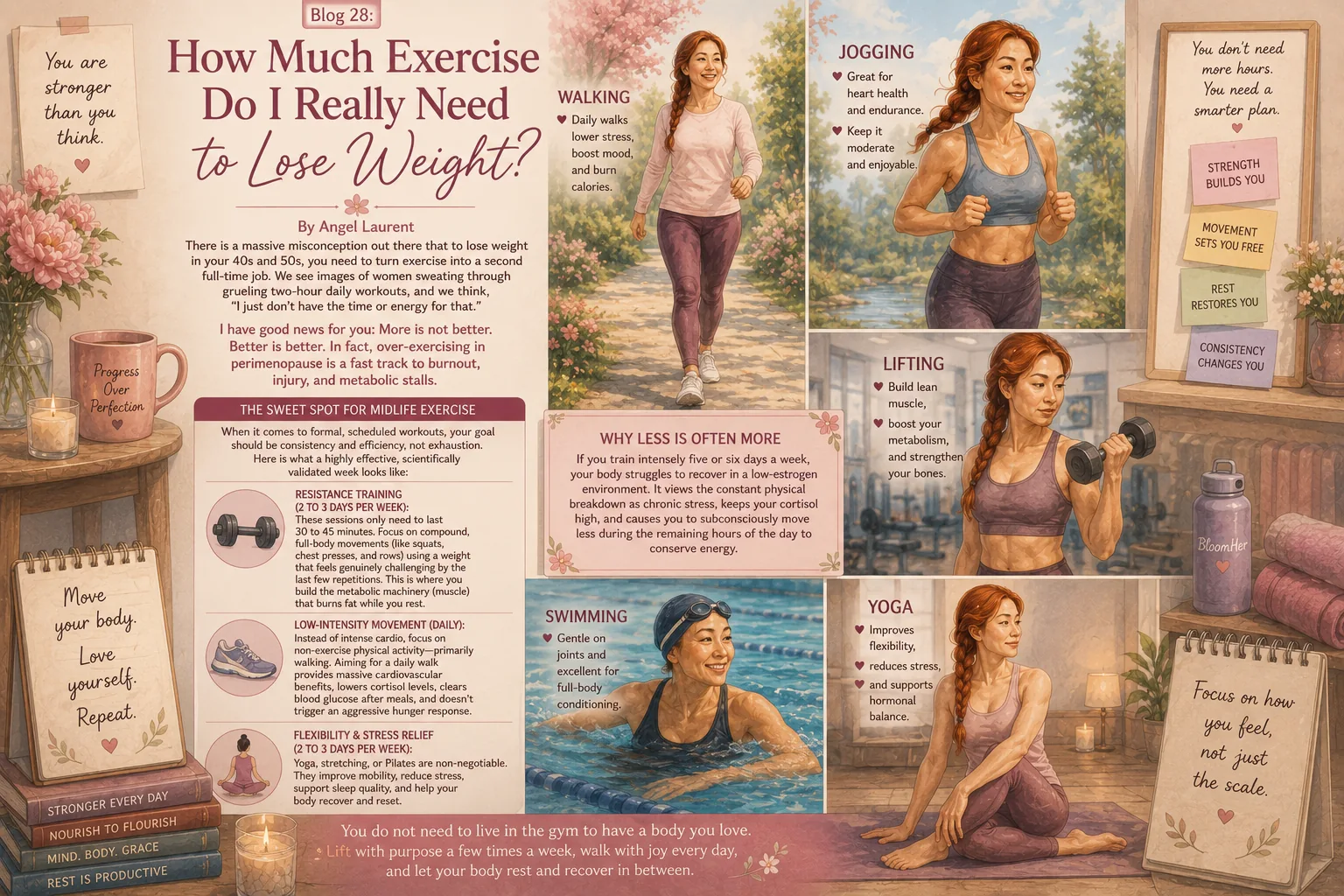
There is a massive misconception out there that to lose weight in your 40s and 50s, you need to turn exercise into a second full-time job. We see images of women sweating through grueling two-hour daily workouts, and we think, "I just do not have the time or energy for that."
I have good news for you: more is not better. Better is better. In fact, over-exercising in perimenopause is a fast track to burnout, injury, and metabolic stalls. If the punishing approach worked, it would have worked by now. Let me show you the version that actually fits your life and your hormones.
The sweet spot for midlife exercise
When it comes to formal, scheduled workouts, your goal should be consistency and efficiency, not exhaustion. Here is what a highly effective, scientifically validated week looks like:
- Resistance training, 2 to 3 days per week: These sessions only need to last 30 to 45 minutes. Focus on compound, full-body movements like squats, chest presses, and rows, using a weight that feels genuinely challenging by the last few repetitions. This is where you build the metabolic machinery, muscle, that burns fat while you rest. If you are wondering what to lift with, I answered that in dumbbells versus bodyweight.
- Low-intensity movement, daily: Instead of intense cardio, focus on non-exercise physical activity, primarily walking. Aiming for a daily walk provides massive cardiovascular benefits, lowers cortisol levels, clears blood glucose after meals, and does not trigger an aggressive hunger response.
That is the entire prescription. Two or three short strength sessions, a daily walk, and rest in between. It fits inside a real life, which is exactly the point I made for busy women in balancing work, kids, and weight loss.
Why less is often more
If you train intensely five or six days a week, your body struggles to recover in a low-estrogen environment. It views the constant physical breakdown as chronic stress, keeps your cortisol high, and causes you to subconsciously move less during the remaining hours of the day to conserve energy.
Sit with that last part, because it is the hidden trap almost nobody warns you about: over-train, and you can actually end up moving less overall, because your exhausted body quietly downshifts everything else. You feel like you are doing more while your body does less. This is the same cortisol-and-recovery problem I unpacked in cardio versus strength and the stress article: in this season, recovery is not the reward for the work. Recovery is where the work becomes results.
What this looks like in your plan
The right dose is personal, and it changes with your stress, your sleep, and your season. Working practitioner-led through BloomHer, alongside your primary care doctor and our network provider, we start with comprehensive lab testing read for optimal, then dose your movement inside your method, ShapeUp as the foundation, Fire inside Radiance, Butter inside Full Bloom, tracking your foods, weight, moods, and sleep cycles in the BloomHer membership app so we can see when your body needs more challenge and when it needs more rest. Remember the measuring stick from why am I always tired: if your energy is climbing, the dose is right. If you are dragging, we pull back before you burn out.
You do not need to live in the gym to have a body you love. Lift with purpose a few times a week, walk with joy every day, and let your body rest and recover in between. That is not the lazy version of the plan. In midlife, it is the smart one, and it is the one that finally works.