Journal · Endometriosis
Women's HealthEndometriosis: An Autoimmune-Like and Inflammatory Neuro-Somatic Disease
By Angel Laurent · June 2026 · 10 min read
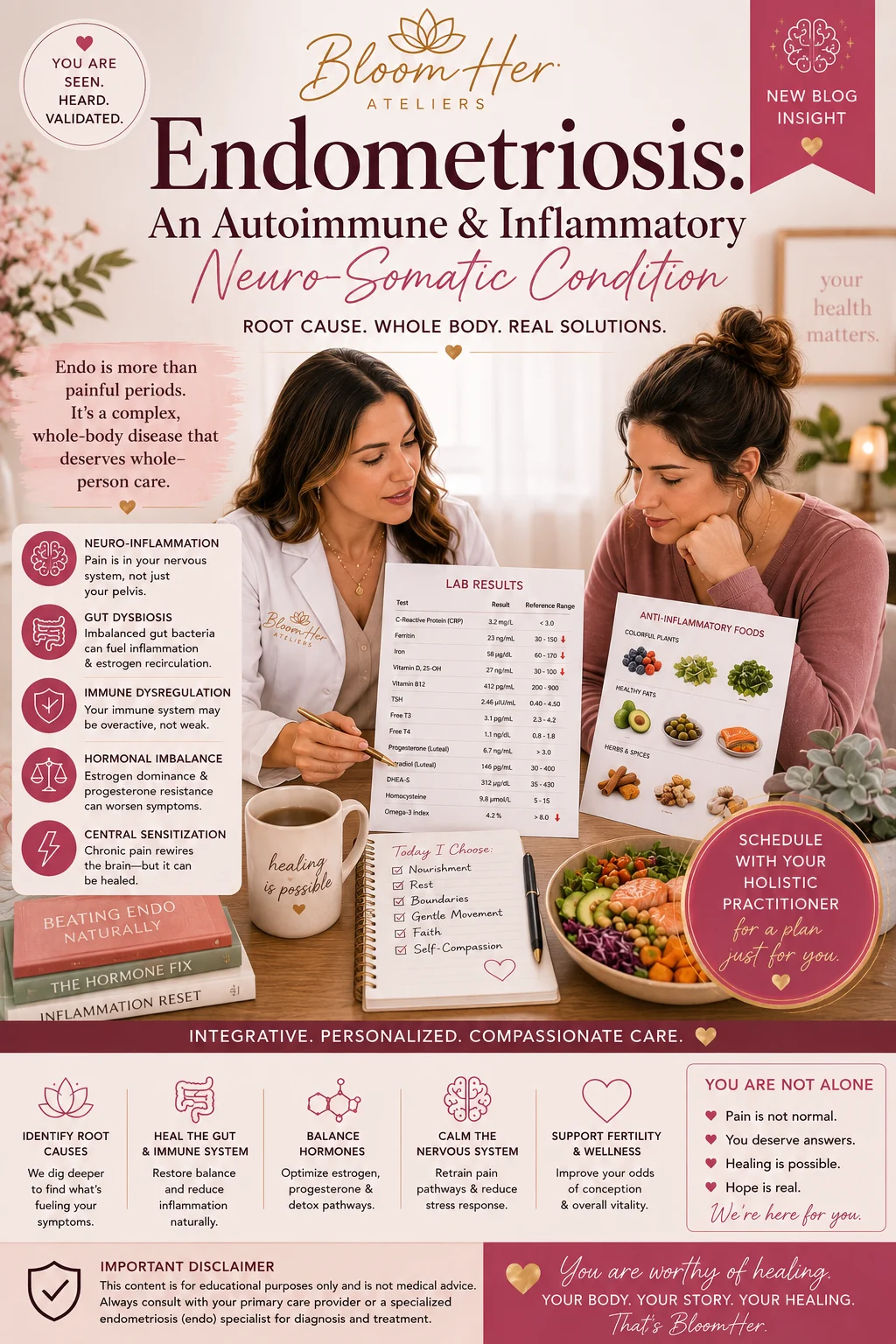
© BloomHer Health 2026 · All Rights Reserved
Your pain is real. Your fatigue is real. Your brain fog is real. Endometriosis is not just a disease of the pelvis, it affects your entire body.
Introduction
Why Endometriosis Is a Full-Body Inflammatory War
For decades, women with endometriosis heard the same dismissive phrases:
"Periods are supposed to hurt."
"It's all in your head."
"You'll feel better after having a baby."
"Your laparoscopy looked fine."
Millions of women know these statements couldn't be further from the truth.
Today, medical research has dramatically changed our understanding of endometriosis. It is no longer viewed simply as misplaced endometrial tissue. Modern evidence describes it as a complex, chronic inflammatory disease involving immune dysfunction, altered pain processing, hormonal influences, angiogenesis (new blood vessel formation), nerve growth, and profound effects on quality of life.
Although endometriosis is not currently classified as an autoimmune disease, it shares many immune-system characteristics with autoimmune conditions, including chronic inflammation, immune dysregulation, altered cytokine activity, and increased prevalence of certain autoimmune diseases. Many experts now describe it as an immune-mediated inflammatory disease rather than a simple gynecologic disorder.
This explains why women often experience symptoms extending far beyond pelvic pain:
- •Severe fatigue
- •Brain fog
- •Painful intercourse
- •Painful bowel movements
- •Painful urination
- •Digestive disturbances
- •Anxiety
- •Depression
- •Sleep disruption
- •Muscle pain
- •Low back pain
- •Hip pain
- •Infertility
Endometriosis affects the whole woman, not just her uterus.
Understanding Endometriosis
Endometriosis occurs when tissue similar to the lining of the uterus grows outside the uterus.
These lesions most commonly involve:
- •Ovaries
- •Pelvic lining
- •Fallopian tubes
- •Bladder
- •Rectum
- •Bowel
- •Pelvic ligaments
Less commonly, endometriosis has been found in distant locations such as the diaphragm, lungs, and surgical scars.
Unlike the uterine lining, these implants cannot exit the body during menstruation.
Instead, they trigger repeated cycles of:
- •Bleeding
- •Inflammation
- •Scar formation
- •Nerve growth
- •Fibrosis
- •Adhesions
Over time, this creates a chronic inflammatory environment throughout the pelvis.
The Neuro-Pain Loop
Why Pain Can Continue Even After Surgery
One of the most frustrating realities of endometriosis is that some women continue to experience pain despite successful laparoscopic excision.
Why?
Researchers now recognize the important role of central sensitization.
Central sensitization occurs when the brain and spinal cord become increasingly sensitive to pain signals.
Imagine repeatedly turning up the volume on a stereo.
Eventually even a whisper sounds loud.
Similarly, years of chronic pelvic inflammation can cause the nervous system to amplify pain signals.
This means that even after inflamed tissue has been removed, the nervous system itself may remain "on high alert."
Brain imaging studies have shown altered activity in pain-processing regions of the brain in women with chronic endometriosis-related pain, supporting the concept that endometriosis is both a pelvic disease and a disorder involving the central nervous system.
This does not mean the pain is psychological.
It means the nervous system has adapted to ongoing inflammation and now requires rehabilitation as well as treatment of the underlying disease.
The Brain, Stress, and Endometriosis
Chronic pain changes the brain.
Women with longstanding endometriosis often experience:
- •Increased anxiety
- •Hypervigilance
- •Difficulty sleeping
- •Depression
- •Emotional exhaustion
- •Difficulty concentrating
Living with persistent pain activates the body's stress response.
Elevated cortisol, poor sleep, and chronic inflammation reinforce one another, creating a vicious cycle.
Breaking this neuro-pain loop requires more than surgery or medication alone.
It requires calming the nervous system while addressing inflammation.
The Estrobolome
Your Gut May Be Fueling Your Endometriosis
One of the most exciting areas of endometriosis research involves the estrobolome.
The estrobolome is the collection of gut bacteria involved in estrogen metabolism.
Certain intestinal bacteria produce the enzyme beta-glucuronidase.
When this enzyme becomes overactive, estrogen that would normally leave the body may be reactivated and reabsorbed.
Higher circulating estrogen can stimulate estrogen-responsive endometriosis lesions.
Researchers are investigating how gut dysbiosis, increased intestinal permeability ("leaky gut"), and altered microbial diversity may contribute to inflammation and disease progression.
Although this research is still evolving, maintaining a healthy gut microbiome is increasingly recognized as an important component of overall health and may play a supportive role in women with endometriosis.
Endometriosis and Infertility
Why Pregnancy Can Be More Difficult
Approximately 30-50% of women with endometriosis experience infertility, although many women with endometriosis conceive naturally.
Endometriosis may affect fertility through several mechanisms:
Inflammation
Inflammatory cytokines within the pelvis may interfere with fertilization and implantation.
Scar Tissue and Adhesions
Adhesions may distort pelvic anatomy, affecting the relationship between the ovary and fallopian tube.
Egg Quality
Oxidative stress may negatively influence oocyte (egg) quality and mitochondrial function.
Implantation
Inflammatory changes within the uterine environment may reduce endometrial receptivity in some women.
Hormonal Signaling
Altered progesterone responsiveness ("progesterone resistance") has been described in endometriosis and may contribute to implantation challenges.
Can Women with Endometriosis Still Become Pregnant?
Absolutely.
Many women with endometriosis conceive naturally.
Others benefit from:
- •Excision surgery by an experienced endometriosis specialist
- •Ovulation induction
- •Intrauterine insemination (IUI)
- •In vitro fertilization (IVF)
- •Lifestyle optimization before assisted reproduction
Every woman's journey is different.
A diagnosis of endometriosis is not the end of hope.
Supporting Fertility with Endometriosis
Lifestyle changes cannot cure endometriosis, but they may support overall reproductive health and improve the environment in which conception occurs.
Evidence-based strategies include:
Blood Sugar Regulation
Stable glucose supports hormonal balance and reduces systemic inflammation.
Mediterranean-Style Nutrition
Emphasizing:
- •Vegetables
- •Fruit
- •Legumes
- •Olive oil
- •Fatty fish
- •Whole grains
- •Nuts
This dietary pattern is associated with lower inflammatory burden and better cardiovascular and metabolic health.
Regular Physical Activity
Moderate exercise may improve insulin sensitivity, mood, circulation, and inflammation.
Sleep Optimization
Seven to nine hours of quality sleep supports immune regulation and hormone balance.
Smoking Cessation and Alcohol Moderation
Both are important for fertility and overall reproductive health.
Evidence-Based Supplements to Discuss with Your Healthcare Team
Some supplements have emerging evidence in fertility or endometriosis research, but they should be individualized with guidance from a qualified clinician.
Possible options include:
- •Coenzyme Q10 (Ubiquinol): Supports mitochondrial energy production and has evidence for improving ovarian response in some fertility populations.
- •Omega-3 fatty acids: May help reduce inflammatory mediators.
- •Vitamin D: Deficiency is common in women with endometriosis; replacement is recommended when levels are low.
- •N-acetylcysteine (NAC): Some studies suggest it may reduce oxidative stress and improve symptoms in selected women.
- •Curcumin: Laboratory and early clinical studies suggest anti-inflammatory properties, though more human research is needed.
- •Magnesium glycinate: May support muscle relaxation and sleep.
- •Probiotics: May support gut microbial diversity, although evidence specific to endometriosis remains limited.
No supplement should replace individualized medical care, and women trying to conceive should review all supplements with their OB-GYN or fertility specialist.
Complementary Approaches
Many women also find supportive benefit from evidence-informed complementary therapies, including:
Pelvic Floor Physical Therapy
Helpful for pelvic floor muscle dysfunction and chronic pain.
Acupuncture
Some evidence suggests acupuncture may improve pain and quality of life for certain women, though results vary.
Mindfulness-Based Stress Reduction
Can improve coping, reduce stress, and lessen pain interference.
Cognitive Behavioral Therapy (CBT)
Useful for managing chronic pain and improving daily functioning.
Yoga and Gentle Mobility
May improve flexibility, circulation, and stress regulation.
Vagus Nerve-Supporting Practices
While research specific to endometriosis is still developing, practices such as diaphragmatic breathing, humming, meditation, prayer, and gentle cold-water facial exposure may support parasympathetic nervous system activity and help some women reduce stress-related symptom amplification.
The BloomHer Protocol
BloomHer believes caring for women with endometriosis requires treating the entire person.
Our approach includes:
Anti-Inflammatory Nutrition
A whole-food eating pattern emphasizing fiber, healthy fats, colorful produce, and adequate protein while minimizing ultra-processed foods.
Gut Restoration
Supporting digestive health through individualized nutrition, fiber intake, and microbiome-friendly habits.
Nervous System Regulation
Daily practices to reduce chronic stress and improve resilience:
- •Breathwork
- •Prayer and meditation
- •Gentle movement
- •Nature exposure
- •Restorative sleep
Hormonal Collaboration
Working alongside an OB-GYN or reproductive endocrinologist to develop an individualized plan that may include hormonal therapy, surgery, fertility treatments, or other evidence-based interventions.
Lifestyle Medicine
Optimizing sleep, movement, body composition, emotional health, and recovery to support long-term wellness.
Hope for the Future
Endometriosis is no longer viewed as simply a painful period.
It is recognized as a complex inflammatory condition involving the immune system, nervous system, hormones, and, often, the gut.
Women deserve comprehensive care that validates both the physical and emotional impact of this disease.
At BloomHer, we believe healing begins when a woman is finally heard.
You are not weak.
You are not imagining your pain.
And you are certainly not alone.
Step Into Your Bloom
If you are living with endometriosis and you are tired of being dismissed, you deserve care that treats the whole woman, your hormones, your gut, your nervous system, and your heart. To build an individualized, practitioner-led plan that works alongside your medical team, book a 1-on-1 BloomHer consultation with me today.
Research and References
Curated sources for further reading. Educational only, not medical advice.
- Zondervan KT, Becker CM, Missmer SA. Endometriosis. *New England Journal of Medicine.* 2020;382:1244-1256.
- International Working Group of the European Society of Human Reproduction and Embryology (ESHRE). ESHRE Guideline: Endometriosis. Updated 2022 (current guideline).
- Stratton P, Berkley KJ. Chronic pelvic pain and central sensitization in endometriosis. *Nature Reviews Disease Primers.*
- Missmer SA, et al. Endometriosis and risk of autoimmune disease: a systematic review. *Human Reproduction Update.*
- Taylor HS, Kotlyar AM, Flores VA. Endometriosis is a chronic systemic disease. *Journal of Clinical Endocrinology & Metabolism.* 2025 review.
- Parasar P, Ozcan P, Terry KL. Endometriosis: Epidemiology, diagnosis and clinical management. *Current Obstetrics and Gynecology Reports.*
- Becker CM, Bokor A, Heikinheimo O, et al. ESHRE Guideline for the Diagnosis and Treatment of Endometriosis. *Human Reproduction Open.* 2022.

About the Author
Angel Laurent, M.Ed.
Angel Laurent is a certified Holistic Health Practitioner, neuro-coach, and founder of BloomHer.health. With a Master's in Education and advanced training in neuroscience and metabolic health, she has dedicated her career to dismantling the "one-size-fits-all" approach to women's wellness, and is the creator of the Let Her Bloom Series and The Ateliers for Women's Health curriculum.
Through high-touch, one-on-one partnerships, her work centers on five pillars of modern women's wellness:
- •Neuro-Somatic Regulation: Chronic burnout, nervous system dysregulation, and the psychological "saboteurs" that stall well-being.
- •Metabolic Optimization: Restoring cellular energy, balancing blood sugar, and reversing insulin resistance behind stubborn weight gain and fatigue.
- •Endocrine & Hormone Synergy: Perimenopause, menopause, and hormonal transitions through evidence-based, holistic interventions.
- •Gut-Brain Axis Restoration: Healing the gut microbiome to enhance cognitive clarity, mood stability, and immune resilience.
- •Epigenetic Lifestyle Design: Bespoke lifestyle protocols to reclaim vitality, executive function, and physical longevity.
Have a question, or want to work with Angel? Reach her at hello@bloomher.health.
Every Woman. At Every Age. The BloomHer Way.
Don't miss a post
Get new insights from Angel Laurent delivered straight to your inbox.
No spam. Unsubscribe anytime.
