Journal · Emotional Health
Emotional HealthThe Biology of Commitment: Fun Facts About the Somatic Contract
By Angel Laurent · June 2026 · 7 min read
© BloomHer Health 2026 · All Rights Reserved
Marriage isn't simply sharing a home. It's sharing biology.
Introduction
Most brides spend months choosing flowers, dresses, and honeymoon destinations.
But almost no one talks about what happens after the wedding...
Inside your brain.
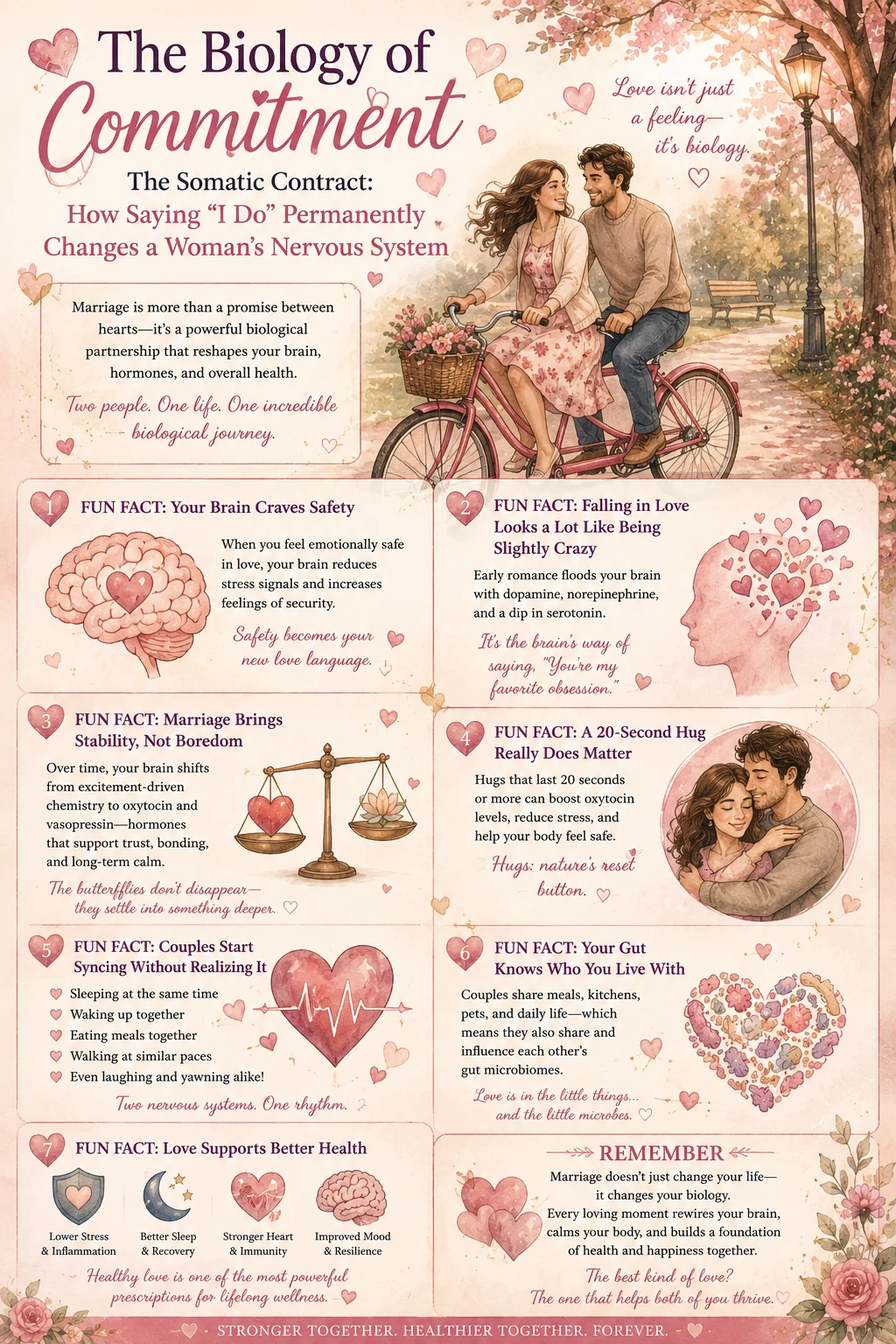
Fun Fact #1: Your Brain Doesn't Know You're Wearing a Ring, But It Knows When You Feel Safe
Scientists have discovered that healthy, long-term relationships can influence everything from your nervous system and sleep quality to your immune system and even how your body responds to stress.
No...
Your wedding ring isn't magical.
But feeling emotionally safe with another human being might be one of the healthiest environments your body can experience.
At BloomHer, we call this The Somatic Contract.
Because the day you commit to someone isn't just a promise between two hearts...
It's the beginning of two nervous systems learning to work together.
Fun Fact #2: Falling in Love Looks a Lot Like Being Slightly Crazy
Remember when you first started dating?
You checked your phone every five minutes.
You couldn't stop thinking about him.
Food wasn't nearly as interesting.
Your friends told you to "calm down."
Science actually has an explanation.
Early romance is powered by a fascinating combination of brain chemicals.
Your brain releases larger amounts of dopamine, the reward neurotransmitter that keeps you wanting "just one more conversation."
Norepinephrine increases excitement, butterflies, sweaty palms, and racing thoughts.
Interestingly, researchers have also observed temporary reductions in serotonin activity during early romantic attachment, which may help explain why people become wonderfully obsessed with each other.
Your brain literally becomes laser focused on one person.
No wonder Grandma always said love makes people do crazy things.
She was partly right.
Your brain chemistry was simply working overtime.
Fun Fact #3: Marriage Isn't Boring, It's More Efficient
People often say,
"The butterflies disappeared."
Here's another way to think about it.
The butterflies finally landed.
Healthy long-term love isn't supposed to feel like a constant roller coaster.
Your nervous system wasn't designed to stay in high alert forever.
Instead, many couples naturally transition from excitement...
...to stability.
Instead of constant uncertainty...
You develop predictability.
Instead of wondering whether he'll call...
You already know he'll be home after work.
That predictability becomes calming for the brain.
Researchers believe secure attachment is associated with increased activity of bonding systems involving oxytocin and vasopressin, two neurochemicals that help support trust, attachment, and long-term pair bonding.
Your body slowly begins saying:
"I can finally relax."
Fun Fact #4: A 20-Second Hug Really Does Matter
Ever notice how one hug from the right person can completely change your day?
That's not your imagination.
Warm, welcome physical affection has been shown to stimulate oxytocin release, helping many people feel calmer and more connected.
Some relationship researchers even suggest lingering hugs, around 20 seconds, may maximize that calming effect.
Think of hugs as tiny conversations between nervous systems.
Without saying a single word, your body hears:
"You're safe."
"I'm here."
"We're okay."
That's powerful medicine.
Fun Fact #5: Married Couples Often Start Sleeping Alike
Here's one that surprises almost everyone.
After years together, many couples gradually begin developing similar daily rhythms.
You might notice:
- •Going to bed around the same time.
- •Waking up naturally within minutes of each other.
- •Eating meals together.
- •Walking at similar speeds.
- •Sharing exercise habits.
- •Even yawning together.
Researchers call this bio-behavioral synchrony.
In other words...
Living together slowly teaches two bodies how to move through life together.
You don't become identical.
You become beautifully coordinated.
Almost like dancing.
BloomHer Fun Takeaway
Marriage isn't simply sharing a home.
It's sharing biology.
Every shared meal...
Every morning coffee...
Every evening walk...
Every prayer...
Every laugh...
Every hug...
Those little moments quietly teach your nervous system something important:
"You don't have to carry life alone anymore."
That's one of the most beautiful gifts healthy commitment has to offer.
In Part 2, we'll explore even stranger discoveries, including why couples often start laughing alike, develop similar gut bacteria, finish each other's sentences, and how emotional safety may help support better sleep, healthier hearts, and greater resilience together.
Step Into Your Bloom
The small, ordinary moments of a safe relationship, the shared meals, the long hugs, the steady routines, are quietly shaping your brain and body for the better. If you want to build the physical foundation that makes that safety even stronger, better sleep, balanced hormones, a calmer nervous system, BloomHer is here to help. Book a private 1-on-1 BloomHer consultation with me today.
Research and References
Curated sources for further reading. Educational only, not medical advice.
- Carter CS. Oxytocin Pathways and the Evolution of Human Behavior. Annual Review of Psychology.
- Coan JA, Schaefer HS, Davidson RJ. Lending a Hand: Social Regulation of the Neural Response to Threat. Psychological Science.
- Holt-Lunstad J, Smith TB, Layton JB. Social Relationships and Mortality Risk: A Meta-analysis. PLoS Medicine.
- Kiecolt-Glaser JK, Wilson SJ. Lovesick: How Couples' Relationships Influence Health. Nature Reviews Immunology.
- Acevedo BP, Aron A, Fisher HE, Brown LL. Neural Correlates of Long-Term Intense Romantic Love. Social Cognitive and Affective Neuroscience.

About the Author
Angel Laurent, M.Ed.
Angel Laurent is a certified Holistic Health Practitioner, neuro-coach, and founder of BloomHer.health. With a Master's in Education and advanced training in neuroscience and metabolic health, she has dedicated her career to dismantling the "one-size-fits-all" approach to women's wellness, and is the creator of the Let Her Bloom Series and The Ateliers for Women's Health curriculum.
Through high-touch, one-on-one partnerships, her work centers on five pillars of modern women's wellness:
- •Neuro-Somatic Regulation: Chronic burnout, nervous system dysregulation, and the psychological "saboteurs" that stall well-being.
- •Metabolic Optimization: Restoring cellular energy, balancing blood sugar, and reversing insulin resistance behind stubborn weight gain and fatigue.
- •Endocrine & Hormone Synergy: Perimenopause, menopause, and hormonal transitions through evidence-based, holistic interventions.
- •Gut-Brain Axis Restoration: Healing the gut microbiome to enhance cognitive clarity, mood stability, and immune resilience.
- •Epigenetic Lifestyle Design: Bespoke lifestyle protocols to reclaim vitality, executive function, and physical longevity.
Have a question, or want to work with Angel? Reach her at hello@bloomher.health.
Every Woman. At Every Age. The BloomHer Way.
Don't miss a post
Get new insights from Angel Laurent delivered straight to your inbox.
No spam. Unsubscribe anytime.
