Journal · Metabolism
Metabolic HealthThe Midlife Belly Fat Shift: Cortisol, Insulin, and Estradiol After 40
By Angel Laurent · June 2026 · 11 min read
© BloomHer Health 2026 · All Rights Reserved
Your body is not broken. It is adapting to one of the most significant hormonal transitions of your life.
Introduction
Why Am I Suddenly Gaining Weight Around My Middle?
If you've reached your 40s or 50s and suddenly noticed that your waistline seems to be expanding despite eating the same foods and exercising the same way you always have, you are not imagining it, and you are certainly not alone.
Many women become frustrated because the strategies that worked in their twenties and thirties no longer produce results. Hours of cardio, eating fewer calories, skipping meals, and working out harder often leave them exhausted while the scale refuses to move. Some women even gain more weight despite their efforts.
The truth is that your body is not "broken." It is adapting to one of the most significant hormonal transitions of your life.
During perimenopause and menopause, estrogen production begins to decline. Your metabolism becomes increasingly influenced by changing levels of estradiol, progesterone, insulin, cortisol, and muscle mass. Rather than simply storing extra fat because of aging, your body begins changing where it stores fat and why it stores it.
Scientists now understand that the increase in abdominal fat during midlife is not simply cosmetic, it is part of a complex biological adaptation involving hormones, metabolism, and survival.
Understanding these changes can help you stop fighting your body and begin working with it.
The Hormonal Shift No One Warned You About
For most of your reproductive years, estradiol, the most biologically active form of estrogen, helps regulate:
- •Body fat distribution
- •Insulin sensitivity
- •Muscle maintenance
- •Bone density
- •Brain function
- •Heart health
- •Energy production
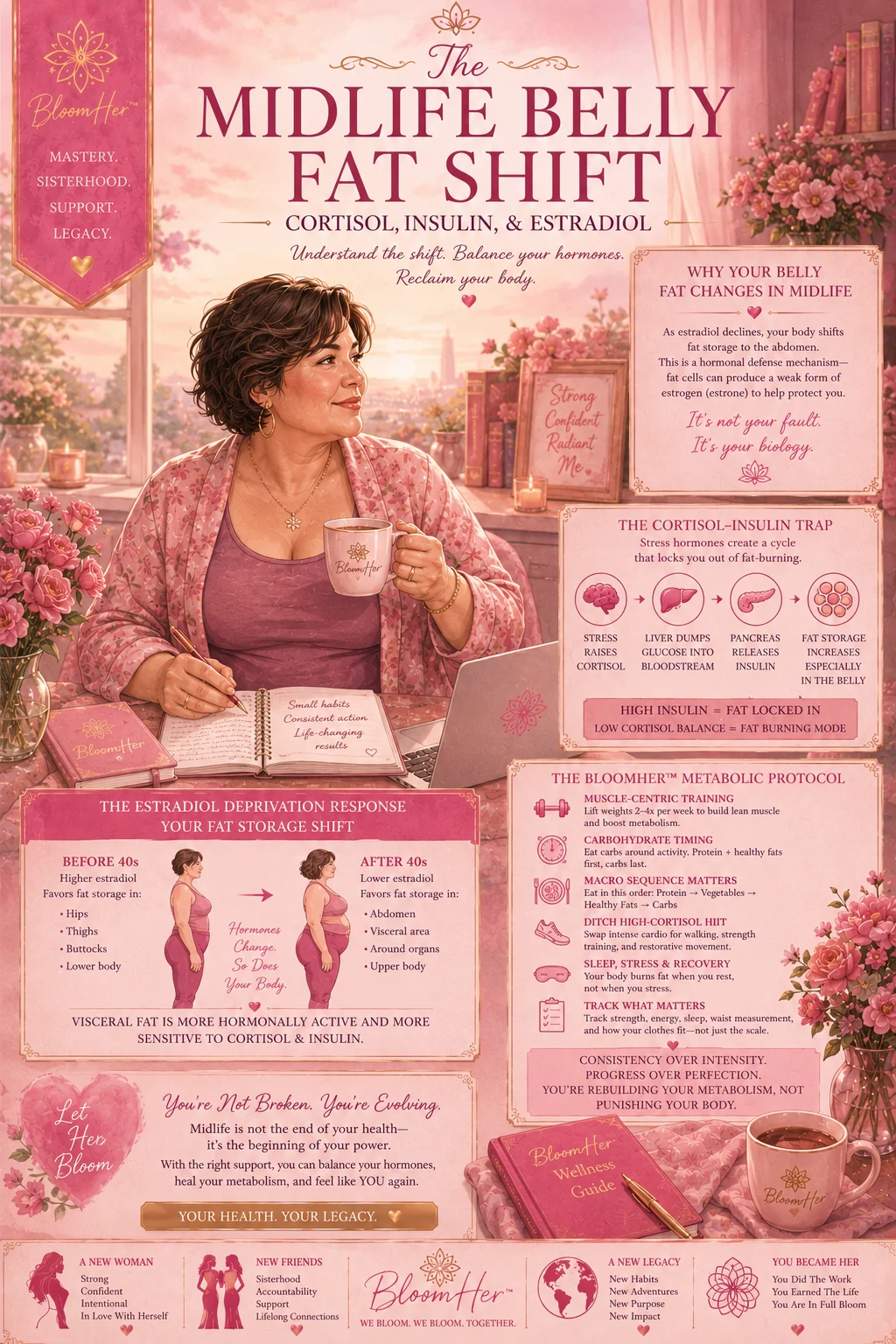
One of estradiol's important roles is directing fat storage toward the hips and thighs.
This fat pattern is sometimes called a gynoid fat distribution, and it serves as an energy reserve for pregnancy and breastfeeding.
As ovarian estradiol production declines during perimenopause, the body begins adapting to this hormonal loss.
Fat storage gradually shifts away from the hips and thighs and moves toward the abdomen.
This abdominal fat, known as visceral adipose tissue, surrounds internal organs and behaves very differently than the fat stored beneath the skin.
Unlike subcutaneous fat, visceral fat is highly metabolically active and produces inflammatory chemicals that influence blood sugar regulation, insulin sensitivity, and cardiovascular health.
Researchers believe this shift is partly a biological adaptation because fat tissue can produce a weaker form of estrogen called estrone. While estrone cannot fully replace estradiol, it may provide a modest source of estrogen after menopause.
Although this adaptation may have offered evolutionary advantages, it also increases the risk for insulin resistance, chronic inflammation, fatty liver disease, Type 2 diabetes, and heart disease.
Why Your Old Weight-Loss Plan Stops Working
Many women respond to midlife weight gain by eating less and exercising more.
Unfortunately, this approach can sometimes make the problem worse.
When calorie intake becomes too low or exercise becomes excessively intense, the body perceives these changes as additional stress.
Stress activates the adrenal glands to produce cortisol.
Although cortisol is essential for survival, chronically elevated cortisol influences how and where fat is stored.
High cortisol levels encourage the body to preserve energy by slowing metabolic processes and increasing appetite, particularly for foods rich in sugar and refined carbohydrates.
Instead of burning fat efficiently, the body becomes increasingly protective of its energy reserves.
This is one reason women often describe feeling as though their metabolism has "shut down."
In reality, the body is responding exactly as it was designed to do during periods of perceived stress.
Understanding the Cortisol-Insulin Trap
Cortisol and insulin are two of the most powerful hormones involved in weight regulation.
When cortisol rises, the liver releases stored glucose into the bloodstream to provide immediate energy for a perceived emergency.
If that energy is not used, for example, during emotional stress rather than physical danger, blood sugar remains elevated.
The pancreas responds by releasing insulin.
Insulin's job is to move glucose into cells for energy or storage.
When insulin remains elevated throughout the day because of chronic stress, frequent snacking, sugary foods, poor sleep, or inactivity, the body becomes less responsive to insulin over time.
This condition is known as insulin resistance.
As insulin resistance develops, the body requires larger amounts of insulin to accomplish the same task.
High insulin levels make it increasingly difficult to access stored body fat for energy.
The result is a frustrating cycle:
- •Elevated cortisol raises blood sugar.
- •Elevated insulin stores excess glucose.
- •Fat burning slows.
- •Hunger increases.
- •Belly fat becomes more resistant to weight loss.
This cycle often explains why women feel as though they are "doing everything right" while still struggling to lose abdominal fat.
Muscle: Your Metabolic Powerhouse
One of the most overlooked factors in midlife weight management is skeletal muscle.
Muscle is metabolically active tissue.
It uses glucose efficiently.
It improves insulin sensitivity.
It supports healthy bone density.
It increases resting metabolic rate.
Beginning in our 30s, adults naturally lose muscle mass unless they intentionally work to preserve it.
This age-related decline, known as sarcopenia, accelerates after menopause because estrogen helps maintain muscle protein synthesis.
Less muscle means:
- •Lower calorie expenditure
- •Reduced insulin sensitivity
- •Slower metabolism
- •Greater fatigue
- •Increased fat storage
For many women, preserving muscle becomes more important than simply losing pounds.
The goal shifts from becoming lighter to becoming metabolically stronger.
Why Walking May Outperform Endless Cardio
Cardiovascular exercise remains important for heart health.
However, hours of high-intensity cardio are not always the most effective strategy during menopause.
For women already experiencing elevated stress hormones, excessive high-intensity exercise may further increase cortisol levels.
A balanced approach often includes:
- •Progressive resistance training
- •Daily walking
- •Mobility work
- •Adequate recovery
- •Consistent sleep
Walking after meals may also help improve blood glucose control and reduce post-meal insulin spikes.
Rather than trying to "burn off" calories through exhaustive exercise, the goal becomes improving metabolic flexibility and preserving lean muscle mass.
BloomHer Metabolic Reset Principles
At BloomHer, we believe lasting fat loss begins with restoring hormonal balance rather than punishing the body.
Our metabolic approach emphasizes:
1. Build Muscle First
Prioritize resistance training two to four times each week to preserve lean muscle and improve insulin sensitivity.
2. Eat Protein Early
Beginning the day with a protein-rich breakfast supports satiety and helps reduce blood sugar fluctuations.
3. Balance Carbohydrates
Rather than eliminating carbohydrates, choose high-quality sources and pair them with protein and healthy fats.
4. Walk Daily
Aim for consistent movement throughout the day, especially after meals.
5. Prioritize Sleep
Poor sleep raises cortisol, increases appetite hormones, and worsens insulin resistance.
6. Manage Stress
Daily breathing exercises, prayer, meditation, journaling, and time outdoors can help regulate the nervous system.
7. Work With Your Healthcare Provider
Persistent weight gain may warrant evaluation for thyroid disease, insulin resistance, sleep apnea, nutrient deficiencies, or hormonal changes that require individualized care.
The BloomHer Perspective
Your body is not betraying you.
It is adapting.
Midlife belly fat is not simply the result of eating too much or exercising too little. It reflects a complex interaction between changing hormones, declining muscle mass, insulin sensitivity, stress physiology, and aging.
The good news is that these systems remain remarkably adaptable.
By supporting muscle health, improving sleep, reducing chronic stress, nourishing your body with balanced meals, and working closely with your healthcare provider, you can improve your metabolic health and regain confidence in your body.
The goal is not to become the woman you were at twenty-five.
The goal is to become the healthiest, strongest, and most vibrant version of yourself today.
Step Into Your Bloom
If the cardio and calorie-cutting that once worked are now leaving you exhausted while the belly fat stays, your body is asking for a different strategy, one that works with your hormones instead of against them. To build a personalized metabolic reset for your midlife body, book a private 1-on-1 BloomHer consultation with me today.
Research and References
Curated sources for further reading. Educational only, not medical advice.
- Davis SR, Lambrinoudaki I, et al. Menopause. 2024. Global Consensus Statement on Menopausal Health.
- North American Menopause Society (The Menopause Society). The 2023 Nonhormone Therapy Position Statement.
- Clegg DJ. Minireview: Sex Hormones and the Regulation of Body Composition. Endocrinology.
- Karastergiou K, Smith SR, Greenberg AS, Fried SK. Sex Differences in Human Adipose Tissue. Biology of Sex Differences.
- American Diabetes Association. Standards of Care in Diabetes 2025.
- American College of Sports Medicine. Exercise Guidelines for Older Adults and Midlife Women.
- National Institute on Aging. Menopause, Healthy Aging, Muscle Mass, and Metabolic Health.

About the Author
Angel Laurent, M.Ed.
Angel Laurent is a certified Holistic Health Practitioner, neuro-coach, and founder of BloomHer.health. With a Master's in Education and advanced training in neuroscience and metabolic health, she has dedicated her career to dismantling the "one-size-fits-all" approach to women's wellness, and is the creator of the Let Her Bloom Series and The Ateliers for Women's Health curriculum.
Through high-touch, one-on-one partnerships, her work centers on five pillars of modern women's wellness:
- •Neuro-Somatic Regulation: Chronic burnout, nervous system dysregulation, and the psychological "saboteurs" that stall well-being.
- •Metabolic Optimization: Restoring cellular energy, balancing blood sugar, and reversing insulin resistance behind stubborn weight gain and fatigue.
- •Endocrine & Hormone Synergy: Perimenopause, menopause, and hormonal transitions through evidence-based, holistic interventions.
- •Gut-Brain Axis Restoration: Healing the gut microbiome to enhance cognitive clarity, mood stability, and immune resilience.
- •Epigenetic Lifestyle Design: Bespoke lifestyle protocols to reclaim vitality, executive function, and physical longevity.
Have a question, or want to work with Angel? Reach her at hello@bloomher.health.
Every Woman. At Every Age. The BloomHer Way.
Don't miss a post
Get new insights from Angel Laurent delivered straight to your inbox.
No spam. Unsubscribe anytime.
