Journal · Emotional Health
Emotional HealthSharing Safety: How Married Couples Synchronize Their Hearts, Nervous Systems, and Gut Microbiomes
By Angel Laurent · June 2026 · 8 min read
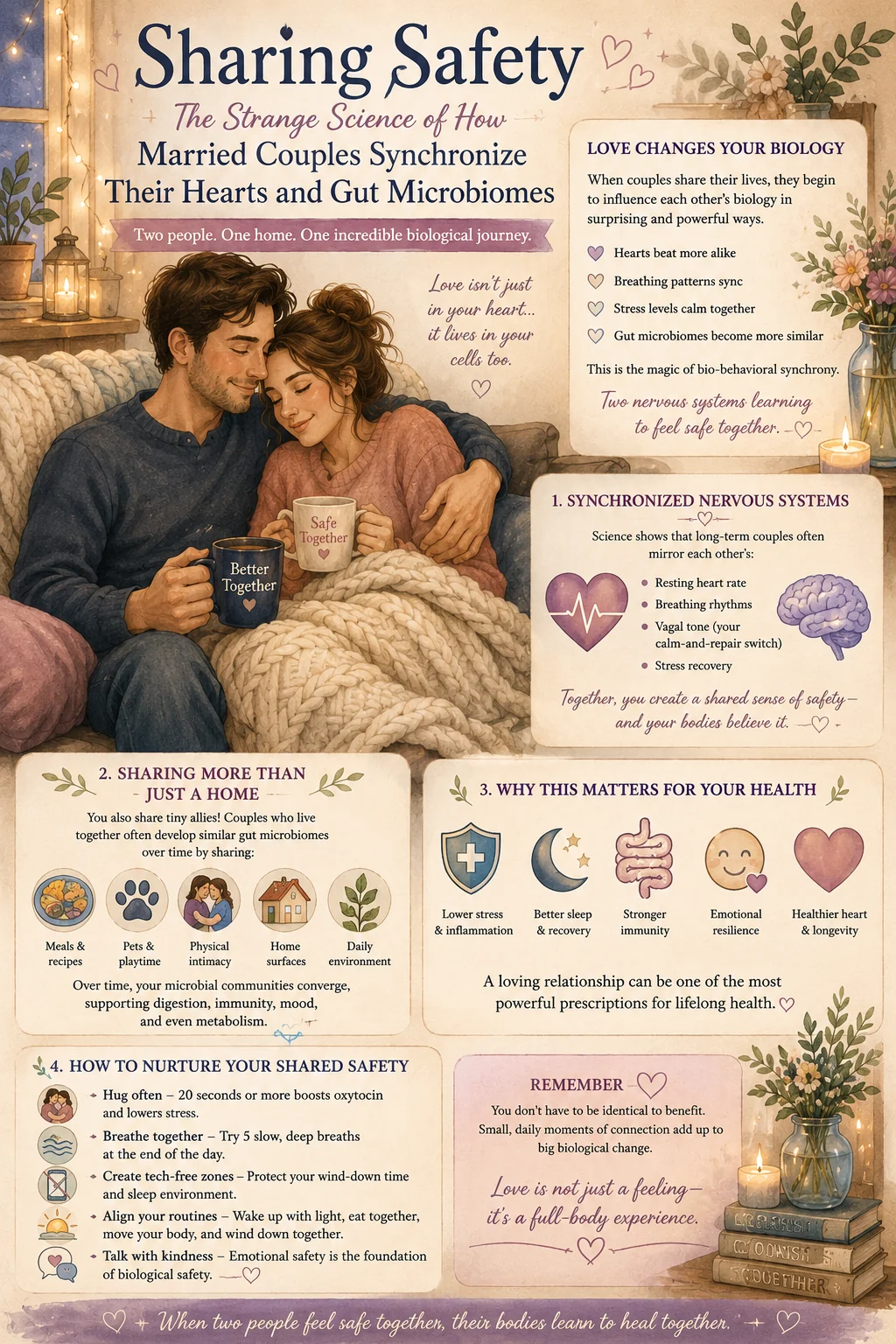
© BloomHer Health 2026 · All Rights Reserved
Healthy love isn't simply emotional. It is biological.
Introduction
Did You Know Your Husband May Be Changing Your Biology?
Most people think marriage changes your last name.
Maybe your address.
Your tax returns.
But modern science suggests that something much more fascinating begins happening after two people share a home, meals, routines, and life together.
Your biology begins to adapt.
No, you don't become the same person.
But over time, researchers have observed that long-term couples often become surprisingly similar in ways neither of them consciously planned.
They may begin eating at the same times.
Sleeping on similar schedules.
Walking at the same pace.
Finishing one another's sentences.
Yawning together.
Laughing at the same moments.
Even more fascinating...
Researchers are exploring how couples living together often show increasing similarities in stress regulation, daily biological rhythms, and even the communities of microorganisms that live inside their digestive systems.
It's almost as if two separate biological worlds slowly begin learning how to live together.
At BloomHer, we call this sharing safety.
Because healthy love isn't simply emotional.
It is biological.
Your Body Is Always Asking One Question
Every second of every day your nervous system quietly asks:
"Am I safe?"
You rarely notice this question because your brain answers it automatically.
Safe people calm us.
Unsafe environments activate us.
Your nervous system doesn't only respond to obvious danger.
It also responds to:
- •Tone of voice
- •Facial expressions
- •Body language
- •Physical touch
- •Daily routines
- •Emotional consistency
When those signals repeatedly communicate safety, your body gradually becomes more efficient at relaxing.
This is one reason many people sleep better beside someone they deeply trust.
The brain learns:
"I don't have to stay on high alert."
Two Nervous Systems Living Together
Marriage is often described as two hearts becoming one.
Neuroscience offers a different perspective.
Marriage becomes two nervous systems continuously communicating.
Think about what happens during an ordinary evening.
You eat dinner together.
Watch television.
Talk about your day.
Go to bed around the same time.
Wake together.
Repeat.
Those simple routines expose each partner to thousands of shared environmental cues every week.
Researchers refer to this process as bio-behavioral synchrony.
Although every couple is different, studies suggest that close partners often become increasingly synchronized in:
- •Daily activity patterns
- •Sleep schedules
- •Emotional responses
- •Breathing rhythms
- •Stress recovery
Some studies have even observed temporary synchronization of heart rate and physiological responses during close emotional interactions.
Scientists continue exploring exactly how these patterns develop, but one thing is clear:
Healthy relationships influence biology.
The Vagus Nerve: Your Internal Safety Switch
One of the most important pathways involved in emotional regulation is the vagus nerve.
This remarkable nerve connects the brain with the heart, lungs, digestive tract, and many other organs.
When your brain perceives safety, vagal activity increases.
As this happens:
- •Heart rate slows.
- •Digestion improves.
- •Breathing becomes calmer.
- •Muscles relax.
- •Inflammation becomes better regulated.
- •Emotional resilience improves.
Researchers often assess this adaptability using heart rate variability (HRV).
Higher HRV is generally associated with better flexibility in responding to stress.
Supportive relationships appear to help many people recover more efficiently after stressful experiences.
Not because marriage is magical, but because emotional safety influences physiology.
Love May Influence Your Gut, Too
Now for one of the strangest discoveries.
Inside your digestive system live trillions of bacteria, viruses, and fungi collectively known as the gut microbiome.
This microscopic ecosystem helps regulate:
- •Digestion
- •Immunity
- •Vitamin production
- •Mood
- •Inflammation
- •Metabolism
Although every person's microbiome is unique, people who share homes often develop increasingly similar microbial communities.
Why?
Because they share:
- •Meals
- •Kitchens
- •Pets
- •Physical affection
- •Household surfaces
- •Daily environments
Researchers believe these shared exposures gradually influence the types of microbes living within each partner.
You don't literally become identical.
But your internal ecosystems may slowly become more alike.
It is one more reminder that relationships extend far beyond emotions.
They become part of your biological environment.
The BloomHer Perspective
Healthy marriages are not simply about romance.
They are about creating an environment where two nervous systems repeatedly experience safety, trust, and consistency.
Every shared meal.
Every evening walk.
Every hug.
Every prayer together.
Every laugh.
These moments become small biological deposits into your future health.
Love is not measured only in anniversaries.
Sometimes it is measured in lower stress, better sleep, calmer hearts, and healthier daily habits that quietly accumulate over decades.
In the next section, we'll explore how shared routines influence metabolism, inflammation, sleep, immune function, and why the healthiest marriages often create healthier lifestyles without either spouse even realizing it.
Step Into Your Bloom
The quiet, daily safety you build with the people you love leaves a real imprint on your heart, your sleep, your gut, and your stress, decade after decade. If you want to strengthen the biological foundation underneath your relationships and your health, BloomHer can help you build the routines, nutrition, and nervous-system support that make safety physical. Book a private 1-on-1 BloomHer consultation with me today.
Research and References
Curated sources for further reading. Educational only, not medical advice.
- Coan JA, Schaefer HS, Davidson RJ. Lending a Hand: Social Regulation of the Neural Response to Threat. Psychological Science.
- Holt-Lunstad J, Smith TB, Layton JB. Social Relationships and Mortality Risk: A Meta-analytic Review. PLoS Medicine.
- Kiecolt-Glaser JK, Wilson SJ. Lovesick: How Couples' Relationships Influence Health. Nature Reviews Immunology.
- Dill-McFarland KA, et al. Close Social Relationships Correlate with Human Gut Microbiota Composition. Scientific Reports.
- Carter CS. Oxytocin Pathways and the Evolution of Human Behavior. Annual Review of Psychology.
About the Author
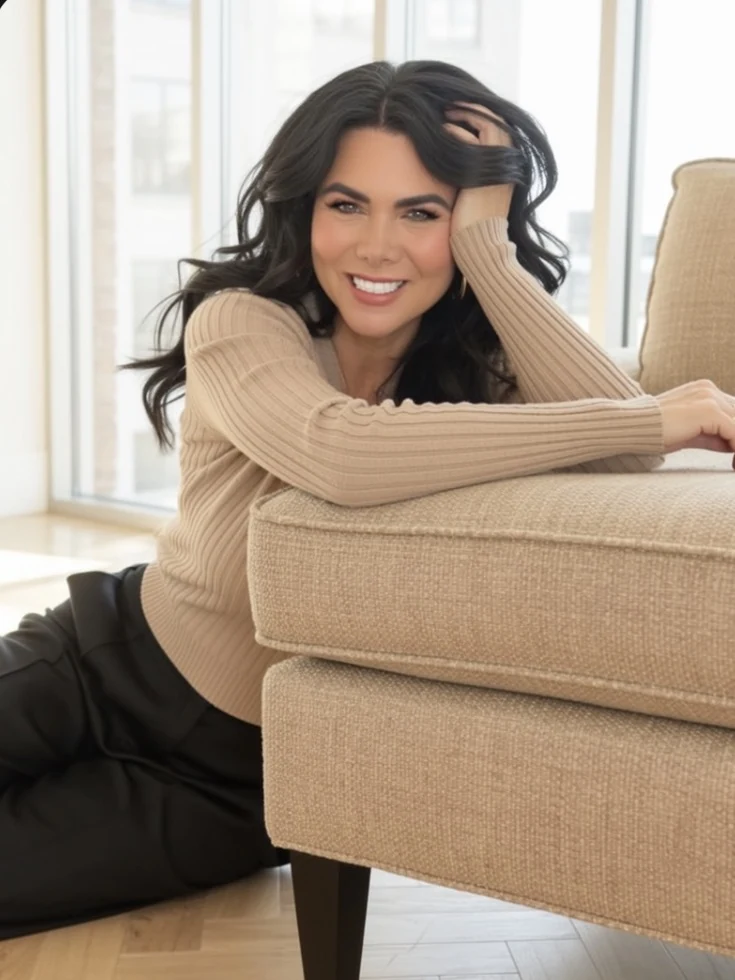
Angel Laurent, M.Ed.
Angel Laurent is a certified Holistic Health Practitioner, neuro-coach, and founder of BloomHer.health. With a Master's in Education and advanced training in neuroscience and metabolic health, she has dedicated her career to dismantling the "one-size-fits-all" approach to women's wellness, and is the creator of the Let Her Bloom Series and The Ateliers for Women's Health curriculum.
Through high-touch, one-on-one partnerships, her work centers on five pillars of modern women's wellness:
- •Neuro-Somatic Regulation: Chronic burnout, nervous system dysregulation, and the psychological "saboteurs" that stall well-being.
- •Metabolic Optimization: Restoring cellular energy, balancing blood sugar, and reversing insulin resistance behind stubborn weight gain and fatigue.
- •Endocrine & Hormone Synergy: Perimenopause, menopause, and hormonal transitions through evidence-based, holistic interventions.
- •Gut-Brain Axis Restoration: Healing the gut microbiome to enhance cognitive clarity, mood stability, and immune resilience.
- •Epigenetic Lifestyle Design: Bespoke lifestyle protocols to reclaim vitality, executive function, and physical longevity.
Have a question, or want to work with Angel? Reach her at hello@bloomher.health.
Every Woman. At Every Age. The BloomHer Way.
Don't miss a post
Get new insights from Angel Laurent delivered straight to your inbox.
No spam. Unsubscribe anytime.
