Journal · Sleep
Sleep & HormonesSolving Women's Insomnia: Reclaiming Your Sleep Architecture in Perimenopause and Menopause
By Angel Laurent · June 2026 · 11 min read
© BloomHer Health 2026 · All Rights Reserved
You aren't anxious because you're awake. You're awake because your brain has shifted into survival mode.
Introduction
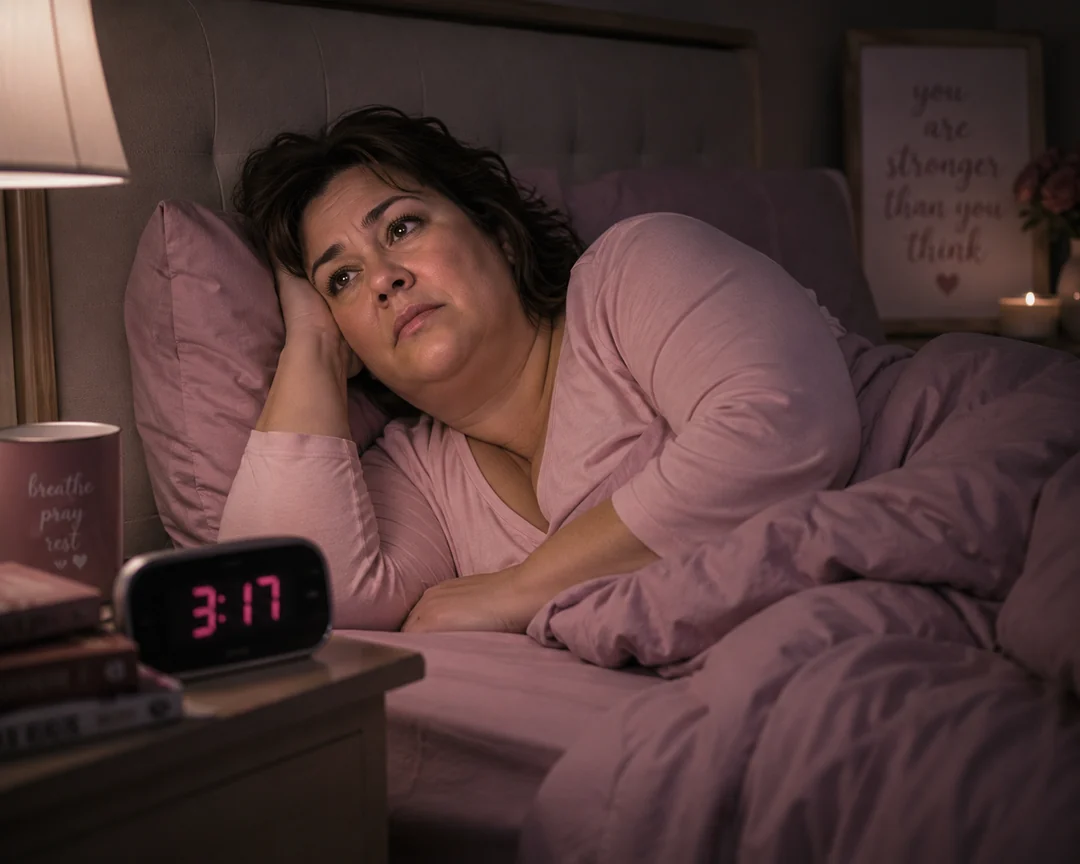
Why Do I Wake Up at 3 A.M. Wide Awake?
You fall asleep without much trouble.
Then, almost like clockwork, your eyes suddenly open.
It's 2:47.
Or 3:12.
Or 3:38.
Your heart feels like it's racing.
Your brain immediately starts making lists.
You think about your children.
Your marriage.
Your health.
Bills.
Work.
Things you forgot to do.
You aren't anxious because you're awake.
You're awake because your brain has shifted into survival mode.
For millions of women entering their forties and fifties, this frustrating pattern becomes one of the earliest signs that hormones are beginning to change. Yet many women assume insomnia is simply part of getting older.
It isn't.
Modern sleep research has shown that female sleep is uniquely influenced by changing reproductive hormones, blood sugar regulation, stress physiology, circadian rhythms, and nervous system health.
Sleep isn't simply "turning your brain off."
It is a highly organized neurological process called sleep architecture.
When that architecture becomes disrupted, you may still spend eight hours in bed while waking up feeling exhausted.
Understanding why this happens is the first step toward restoring healthy sleep.
What Is Sleep Architecture?
Every night your brain cycles through several stages of sleep.
These include:
- •Light sleep (Stage N1)
- •Stable sleep (Stage N2)
- •Deep restorative sleep (Stage N3)
- •REM sleep (Rapid Eye Movement)
These stages repeat every 90 to 120 minutes throughout the night.
Each stage serves a unique purpose.
Deep sleep repairs muscles, strengthens immunity, releases growth hormone, and restores physical energy.
REM sleep supports memory, emotional regulation, creativity, and learning.
Healthy sleep depends on moving smoothly through these stages without repeated interruptions.
Even brief awakenings can fragment sleep architecture and leave you feeling tired despite spending enough hours in bed.
The Progesterone Connection
One of the biggest reasons sleep changes during perimenopause is the gradual decline in progesterone.
Progesterone is often called the body's natural calming hormone.
Inside the brain, progesterone is converted into a neurosteroid called allopregnanolone.
Allopregnanolone interacts with GABA-A receptors, the brain's primary calming system.
GABA acts like the brake pedal of the nervous system.
It slows racing thoughts.
Reduces anxiety.
Promotes relaxation.
Helps initiate deep sleep.
As progesterone declines during perimenopause, production of allopregnanolone also decreases.
The result is a brain that becomes more easily stimulated and less able to remain asleep throughout the night.
Many women notice:
- •Waking between 2-4 A.M.
- •Racing thoughts
- •Increased anxiety
- •Restless sleep
- •Nighttime panic sensations
- •Difficulty returning to sleep
These changes are not signs of weakness.
They are biological changes occurring within the central nervous system.
Why 3 A.M. Happens So Often
Many women wonder why they consistently wake around the same time every night.
The answer often involves both hormones and metabolism.
While you sleep, your brain continuously monitors blood glucose levels.
Your brain requires a steady supply of glucose to function properly.
If blood sugar falls too low overnight, the brain activates emergency hormones to protect itself.
These include:
- •Cortisol
- •Adrenaline (epinephrine)
- •Glucagon
These hormones rapidly raise blood sugar.
Unfortunately, they also wake you up.
This explains why many women awaken suddenly with:
- •A pounding heart
- •Sweating
- •Anxiety
- •Racing thoughts
- •Feeling "wide awake"
The problem often isn't psychological.
It's physiological.
The brain believes it must save your life by restoring blood sugar.
Cortisol: Helpful During the Day, Disruptive at Night
Cortisol follows a natural daily rhythm called the circadian rhythm.
Normally:
- •Cortisol is lowest during the early part of the night.
- •It gradually rises before morning.
- •It peaks shortly after waking.
During chronic stress, poor sleep, insulin resistance, menopause, or prolonged inflammation, this rhythm can become disrupted.
Instead of remaining low overnight, cortisol begins rising too early.
This premature cortisol surge may trigger nighttime awakenings long before your alarm clock rings.
Over time, poor sleep increases cortisol even further, creating a frustrating cycle in which insomnia and stress reinforce one another.
Why Midlife Women Are Especially Vulnerable
Several biological changes occur simultaneously during perimenopause:
- •Progesterone declines.
- •Estradiol fluctuates unpredictably.
- •Muscle mass gradually decreases.
- •Insulin sensitivity may worsen.
- •Night sweats become more common.
- •Cortisol regulation changes.
- •Melatonin production naturally declines with age.
Together, these changes create the perfect environment for fragmented sleep.
This is why women who have slept well for decades may suddenly develop insomnia with no obvious explanation.
The BloomHer Sleep Restoration Protocol
Step One: Calm the Nervous System Before Bed
Your brain cannot enter restorative sleep while it believes you are under threat.
Create a nightly transition ritual that signals safety.
Consider:
- •Dimming lights one to two hours before bedtime
- •Reading instead of scrolling on your phone
- •Prayer or gratitude journaling
- •Gentle stretching
- •Deep diaphragmatic breathing
- •Warm showers or baths
Consistency matters more than perfection.
Step Two: Stabilize Overnight Blood Sugar
Some women who experience frequent 3 A.M. awakenings may benefit from discussing evening nutrition with their healthcare provider or registered dietitian.
A balanced evening snack that combines protein with healthy fat may help support overnight glucose stability for some individuals.
Examples include:
- •Plain Greek yogurt with walnuts
- •Cottage cheese with berries
- •Apple slices with natural almond butter
- •A boiled egg with a few whole-grain crackers
Individual needs vary, especially for women with diabetes or other metabolic conditions.
Step Three: Support the Brain's Natural Calming System
Always discuss supplements with your healthcare provider, particularly if you are pregnant, breastfeeding, taking medications, or have medical conditions.
Commonly studied options include:
- •Magnesium L-threonate
- •L-theanine
- •Glycine
- •Apigenin
- •Melatonin (for selected individuals)
- •Cognitive Behavioral Therapy for Insomnia (CBT-I), considered the first-line treatment for chronic insomnia
For some women, evaluation for menopausal hormone therapy may also be appropriate. Decisions about hormone therapy should always be individualized in consultation with a qualified healthcare professional.
The BloomHer Perspective
Sleep is not a luxury.
It is one of the body's most powerful healing systems.
When progesterone begins declining, cortisol becomes dysregulated, and blood sugar fluctuates overnight, insomnia is not simply "in your head."
It is often the result of real physiological changes occurring within your brain and body.
At BloomHer, we believe every woman deserves to understand these changes rather than simply accepting exhaustion as a normal part of aging.
With the right combination of lifestyle strategies, medical evaluation when appropriate, stress reduction, and personalized care, restorative sleep can often improve dramatically.
You deserve mornings that begin with energy instead of exhaustion.
You deserve nights that restore rather than deplete.
Because when a woman sleeps well, every system in her body has the opportunity to bloom.
Step Into Your Bloom
If you fall asleep fine but wake at 3 a.m. with a racing heart and a racing mind, that is biology, not a character flaw, and it can be addressed. To uncover what is fragmenting your sleep and build a personalized restoration plan for your hormones, nervous system, and overnight blood sugar, book a private 1-on-1 BloomHer consultation with me today.
Research and References
Curated sources for further reading. Educational only, not medical advice.
- The Menopause Society (formerly North American Menopause Society). The 2023 Nonhormone Therapy Position Statement.
- American Academy of Sleep Medicine. Clinical Practice Guideline for Chronic Insomnia Disorder in Adults.
- National Institute on Aging. A Good Night's Sleep.
- Krystal AD. Sleep Architecture and Neurobiology of Insomnia. Sleep Medicine Clinics.
- Reddy DS. Neurosteroids and Allopregnanolone in Brain Function and Sleep Regulation. Frontiers in Endocrinology.
- Brown GM, et al. Circadian Rhythms, Melatonin, and Sleep. Journal of Pineal Research.
- Tasali E, Leproult R, Ehrmann DA, Van Cauter E. Slow-Wave Sleep and Glucose Regulation. Proceedings of the National Academy of Sciences.
- Van Cauter E, Spiegel K. Sleep and Endocrine Function. Lancet.
- American College of Obstetricians and Gynecologists (ACOG). Management of Menopausal Symptoms.
- National Institutes of Health. Office of Research on Women's Health. Sleep Health Across the Female Lifespan.
- Morgenthaler TI, et al. Cognitive Behavioral Therapy for Chronic Insomnia. Sleep.
- National Heart, Lung, and Blood Institute. Healthy Sleep: Why Sleep Matters.

About the Author
Angel Laurent, M.Ed.
Angel Laurent is a certified Holistic Health Practitioner, neuro-coach, and founder of BloomHer.health. With a Master's in Education and advanced training in neuroscience and metabolic health, she has dedicated her career to dismantling the "one-size-fits-all" approach to women's wellness, and is the creator of the Let Her Bloom Series and The Ateliers for Women's Health curriculum.
Through high-touch, one-on-one partnerships, her work centers on five pillars of modern women's wellness:
- •Neuro-Somatic Regulation: Chronic burnout, nervous system dysregulation, and the psychological "saboteurs" that stall well-being.
- •Metabolic Optimization: Restoring cellular energy, balancing blood sugar, and reversing insulin resistance behind stubborn weight gain and fatigue.
- •Endocrine & Hormone Synergy: Perimenopause, menopause, and hormonal transitions through evidence-based, holistic interventions.
- •Gut-Brain Axis Restoration: Healing the gut microbiome to enhance cognitive clarity, mood stability, and immune resilience.
- •Epigenetic Lifestyle Design: Bespoke lifestyle protocols to reclaim vitality, executive function, and physical longevity.
Have a question, or want to work with Angel? Reach her at hello@bloomher.health.
Every Woman. At Every Age. The BloomHer Way.
Don't miss a post
Get new insights from Angel Laurent delivered straight to your inbox.
No spam. Unsubscribe anytime.
